
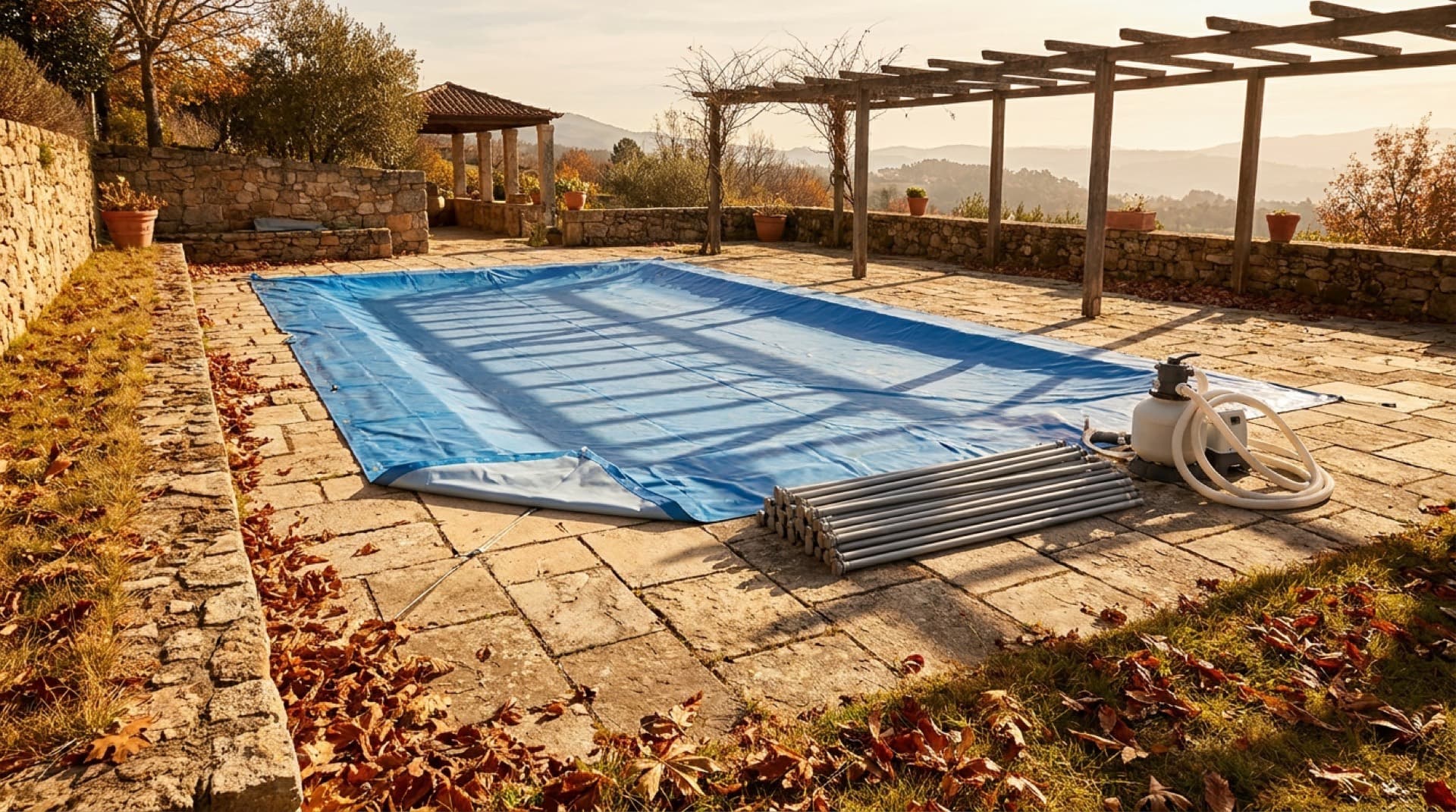
Storing Your Pool for Winter
Put it away properly in October and it is ready in May — put it away damp and it is finished
More above-ground pools are destroyed in storage than in use. A liner folded away while still slightly damp will grow mould over the winter, and mould does not wash out — it stains permanently and weakens the material. The whole process takes a weekend, most of which is waiting for things to dry, and it is what decides whether you are buying a new pool next spring or simply setting up the one you have.
Why Storage Decides the Lifespan
A pool liner spends five months full of treated water and seven months folded in a box. The folded months are harder on it. Trapped moisture breeds mould, residual chlorine left on the surface keeps working on the material, sharp folds become permanent creases that crack, and rodents treat a soft folded liner as excellent nesting material. Address those four things and the same pool goes up again year after year.
Closing Down, Step by Step
Pick a dry, breezy weekend in October. Do not rush the drying steps — they are the whole point.
- 1Balance the water and run the filter for a day or two before you drain. Draining a green pool spreads the problem across your garden and leaves residue on the liner.
- 2Check where the water can legally and sensibly go. Treated pool water should not go into a vegetable bed, a watercourse or a neighbour's land; let chlorine dissipate for a few days first and disperse it slowly across a lawn or into a foul drain.
- 3Drain fully, using the drain valve and a hose to carry the water clear of the base you spent a day preparing.
- 4Clean the liner while it is still in place — a soft brush and a mild pool-surface cleaner, paying attention to the waterline where the greasy tide-mark forms.
- 5Rinse thoroughly. Any chlorine residue left on the liner will keep attacking the material for seven months in a dark box.
- 6Let it dry completely, in place if you can, turning it once. Completely means completely — no damp folds, no water in the corners, no cool spots that never saw the sun.
- 7Dismantle the frame, keeping the fixings together in a labelled bag. Losing four pins in October is a genuinely annoying way to start May.
- 8Drain the pump fully, remove and discard the cartridge, and store the pump indoors. Water left in a pump housing over a cold snap cracks it.
- 9Fold the liner loosely, along different lines from last year, with a light dusting of talc if it will be stored somewhere cold. Avoid tight, sharp creases.
- 10Store everything in a sealed, rigid container somewhere dry and shaded — a garage or storage room, not an outdoor shed floor and never directly on concrete.
- 11Protect against rodents. A folded liner in a soft bag is ideal nesting material, and mouse damage is the most common reason a pool does not survive its first winter in storage.
- 12Mark out the prepared base before you leave it, or photograph it with measurements. Finding the exact level spot again in May saves you repeating the hardest job.
Winter in Portugal — Do You Even Need to Take It Down?
Portuguese winters are mild enough that freezing damage is rarely the concern it is further north, and along the coast in Greater Lisbon a rigid-panel pool can reasonably stay up year-round with a winter cover and reduced filtration. For a steel-frame tubular pool the calculation is different: it is the winter rain, wind and seven months of UV on an empty or half-full liner that shorten its life, not the cold. Taking it down in October typically doubles how many seasons you get. Interior regions such as Sintra's higher ground do see occasional frost, which is a straightforward argument for draining and storing. If you would rather not spend the weekend on it, closing down and storing is part of what our team does at the end of the season — and we will tell you honestly if your pool is better off left standing.
How Our Team Can Help
If you would rather not handle this yourself, these are the services that cover what you just read.
Frequently Asked Questions
When should I take an above-ground pool down in Portugal?
Mid to late October for most of the country. Wait for a dry spell — you need two or three consecutive dry days for the liner to dry properly, and those get harder to find as November arrives.
Can I leave my above-ground pool up over the winter?
A rigid-panel pool, yes, with a proper winter cover and the filter running briefly each day. A steel-frame or inflatable pool, no — you will lose two or three years of its life to winter weather and UV, which costs more than the weekend you saved.
Where do I drain the water?
Stop chlorinating a few days before, let the residual dissipate, then disperse it slowly over lawn or hard-landscaped ground, or into a foul drain. Never into a watercourse, a storm drain, a vegetable garden or onto a neighbour's property, and never all at once onto a slope.
How do I stop the liner going mouldy in storage?
Dry it completely and store it sealed, dry and shaded. Mould needs moisture; if there is none trapped in the folds there is nothing to grow. This one step is the difference between a liner lasting three seasons and eight.
Do I need to replace the sand base each year?
No, but check and re-level it in spring. Winter rain settles and channels a sand screed, and a base that was perfect in October is rarely still perfect in May. Re-screeding takes an hour; skipping it costs you the pool.
Need Professional Pool Care?
Our expert team provides comprehensive pool maintenance services across Portugal — so you can enjoy your pool worry-free.