

Fiberglass Pools
Low-maintenance, durable, and increasingly popular in Portuguese properties
Fiberglass pools are gaining ground in Portugal thanks to their fast installation, smooth non-porous surface, and lower maintenance requirements compared to concrete. The gelcoat finish resists algae growth and requires fewer chemicals, making them an excellent choice for the Portuguese climate.
Fiberglass Pool Characteristics
Fiberglass pools are factory-manufactured shells installed as a single piece. The smooth gelcoat surface is non-porous, which means algae can't embed in the walls like it can with concrete or plaster. This makes them significantly easier to maintain and less chemical-intensive.
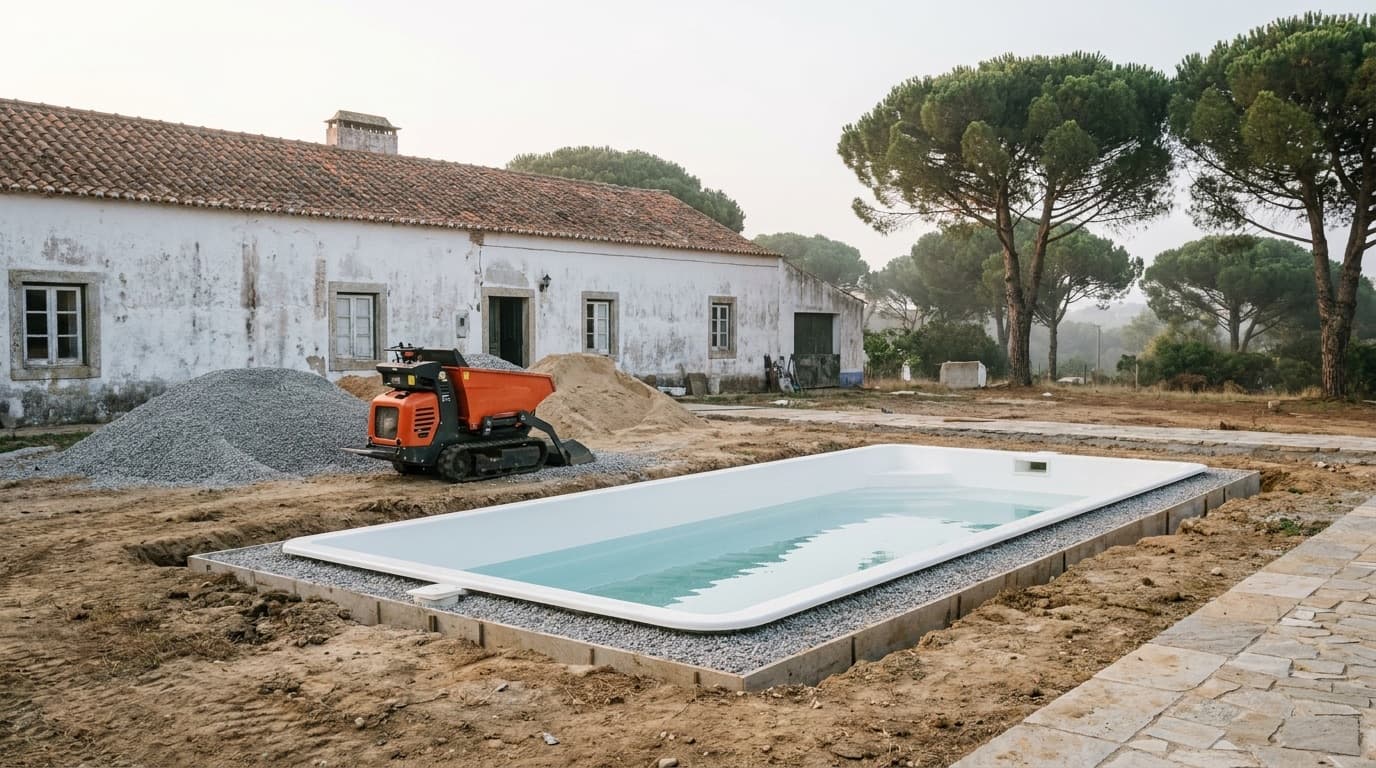
Construction guide
Fibreglass pools
2026 installed and shell-only prices, sizes, step-by-step installation, crane access and osmosis.
Read the guideFiberglass Pool Maintenance Schedule
Fiberglass pools require the least maintenance of any pool type, but they do have specific care requirements:
Weekly Tasks
- Skim surface debris and empty baskets
- Test full water chemistry panel
- Brush waterline to remove deposits
- Check and clean pool filter
Monthly Tasks
- Deep clean for guest turnover
- Inspect gelcoat for cracks or blistering
- Check all fittings, jets, and returns
- Test calcium hardness level
Seasonal Tasks
- Inspect pool shell for cracks or damage
- Wax gelcoat surfaces above waterline
- Check for groundwater pressure issues
Fiberglass Pools in Portugal
The fiberglass pool market is growing rapidly in Portugal. Quick installation (often just 1-2 weeks including landscaping) makes them popular for new builds and renovation projects. The smooth surface is ideal for Portugal's warm climate where algae growth is a constant concern with other pool types.
Common Fiberglass Pool Problems
Fiberglass pools have fewer problems overall, but the gelcoat surface requires specific attention — and osmotic blistering is the most serious issue to watch for.
Frequently Asked Questions
How long does a fiberglass pool last?
A quality fiberglass pool shell lasts 25-30+ years. The gelcoat surface may need refinishing after 15-20 years, but the structural shell itself is extremely durable. Many early fiberglass pools from the 1990s are still in excellent condition.
What is osmotic blistering?
Osmosis occurs when water slowly penetrates the gelcoat and reacts with the fiberglass layers beneath, creating fluid-filled blisters. It's uncommon in quality pools but can occur in lower-grade shells or pools with consistently poor water chemistry.
Can I use a robotic cleaner in a fiberglass pool?
Yes — robotic cleaners work excellently on the smooth fiberglass surface. Choose a model with rubber or foam rollers rather than bristle brushes to protect the gelcoat finish.
Do fiberglass pools crack?
Fiberglass is naturally flexible and handles ground movement better than concrete. Surface spider cracks in the gelcoat can occur but are cosmetic — they don't affect structural integrity and can be repaired.
Can I change the color of my fiberglass pool?
Yes. The gelcoat can be refinished in a different color, though this is a professional job. It's typically done when the original gelcoat is due for refurbishment, usually after 15-20 years.
Need Help With Your Pool?
Our expert technicians maintain all pool types across Portugal. Get professional care tailored to your specific pool.