

Concrete Pools
The classic pool choice — built to last with proper maintenance
Concrete pools are the traditional choice in Portugal, offering unlimited customization in shape, size, and finish. They're built to last decades but require more maintenance than fiberglass alternatives. Understanding the specific needs of concrete and plaster surfaces keeps your pool looking beautiful and structurally sound.
Concrete Pool Characteristics
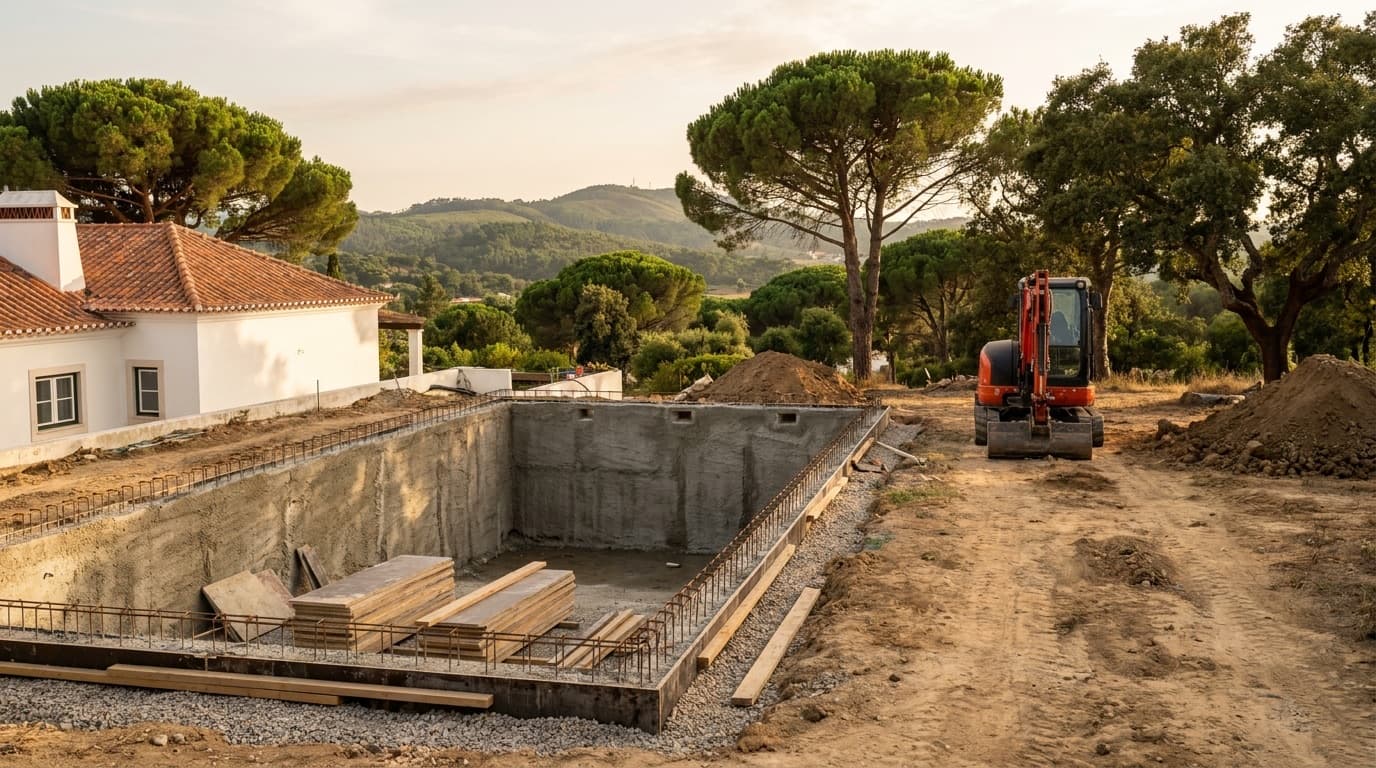
Concrete pools are constructed on-site using reinforced concrete (gunite or shotcrete), then finished with plaster, tile, or exposed aggregate. The porous surface requires more chemical treatment than non-porous alternatives, but the design flexibility is unmatched.
Construction guide
Pool construction
The complete guide: prices by pool type, the build stages, permits, and the questions to ask any builder.
Read the guideConcrete Pool Maintenance Schedule
Concrete pools demand the most maintenance attention, particularly regarding surface care and water chemistry:
Weekly Tasks
- Brush pool walls and floor
- Test full water chemistry panel
- Skim surface debris and empty baskets
- Check and adjust water level
Monthly Tasks
- Acid wash pool surfaces
- Inspect tiles for cracks or loose pieces
- Check grout condition between tiles
- Clean waterline tile and coping
Seasonal Tasks
- Replaster pool surfaces as needed
- Repair cracked or loose tiles
- Annual structural crack inspection
Concrete Pools in Portugal
The majority of existing pools in Portugal are concrete construction. Portuguese pool builders have decades of experience with concrete and tile finishes. While fiberglass is gaining share in new builds, concrete remains the choice for custom shapes, large pools, and architectural designs.
Common Concrete Pool Problems
Concrete pools are susceptible to surface degradation, tile damage, and algae growth in the porous surface — issues that require regular attention in Portugal's climate.
Frequently Asked Questions
How often does a concrete pool need replastering?
Standard white plaster lasts 7-12 years. Pebble finishes last 15-20 years. In Portugal's warm climate with higher chemical usage, plaster may wear faster. Signs it's time: rough texture, staining that won't clean, and exposed concrete showing through.
Why is my concrete pool always growing algae?
Concrete and plaster surfaces are porous, giving algae places to root. More frequent brushing (weekly), higher chlorine levels, and proper filtration are essential. An algaecide maintenance dose helps in Portugal's warm months.
How much does concrete pool resurfacing cost?
In Portugal, replastering a standard pool costs €3,000-€8,000 depending on size and finish type. Pebble and quartz finishes cost more but last significantly longer.
Can concrete pools crack?
Yes. Ground movement, settling, and Portugal's mild seismic activity can cause structural cracks. Small surface cracks are cosmetic, but cracks that leak water need professional structural repair.
Is acid washing safe for my concrete pool?
Acid washing removes a thin layer of plaster to reveal clean surface beneath. It's safe when done professionally, but each wash shortens plaster life. Typically done every 3-5 years, or as needed for stubborn stains.
Need Help With Your Pool?
Our expert technicians maintain all pool types across Portugal. Get professional care tailored to your specific pool.